Build a Voice Command Robot with Arduino (Bluetooth Guide)
Can I make a voice command robot using Arduino?
Yes. An Arduino can run a voice command robot by listening through a microphone or Bluetooth link, converting speech into simple commands, and then driving motors, servos, LEDs, or sensors based on what it hears. The most common setup is Arduino + motor driver + chassis (or a robot base) + a voice input method such as a phone app over Bluetooth, a dedicated voice-recognition module, or an external board that handles speech-to-text.
A practical approach is to keep the Arduino focused on motion and safety, while speech recognition happens elsewhere. For example, a smartphone can do the heavy lifting for speech recognition, then send commands like “forward,” “left,” “stop,” or “dance” to the Arduino. This keeps the build cheaper and more reliable than trying to run speech recognition directly on a small microcontroller.
Core parts usually include: an Arduino-compatible board, a motor driver (like an L298N or TB6612FNG), DC gear motors or servos, a stable battery pack, and a communications method (Bluetooth module such as HC-05/HC-06, or a voice module). Add obstacle avoidance (ultrasonic sensor), bump switches, or line tracking to prevent accidents when a voice command sends the robot toward an object.
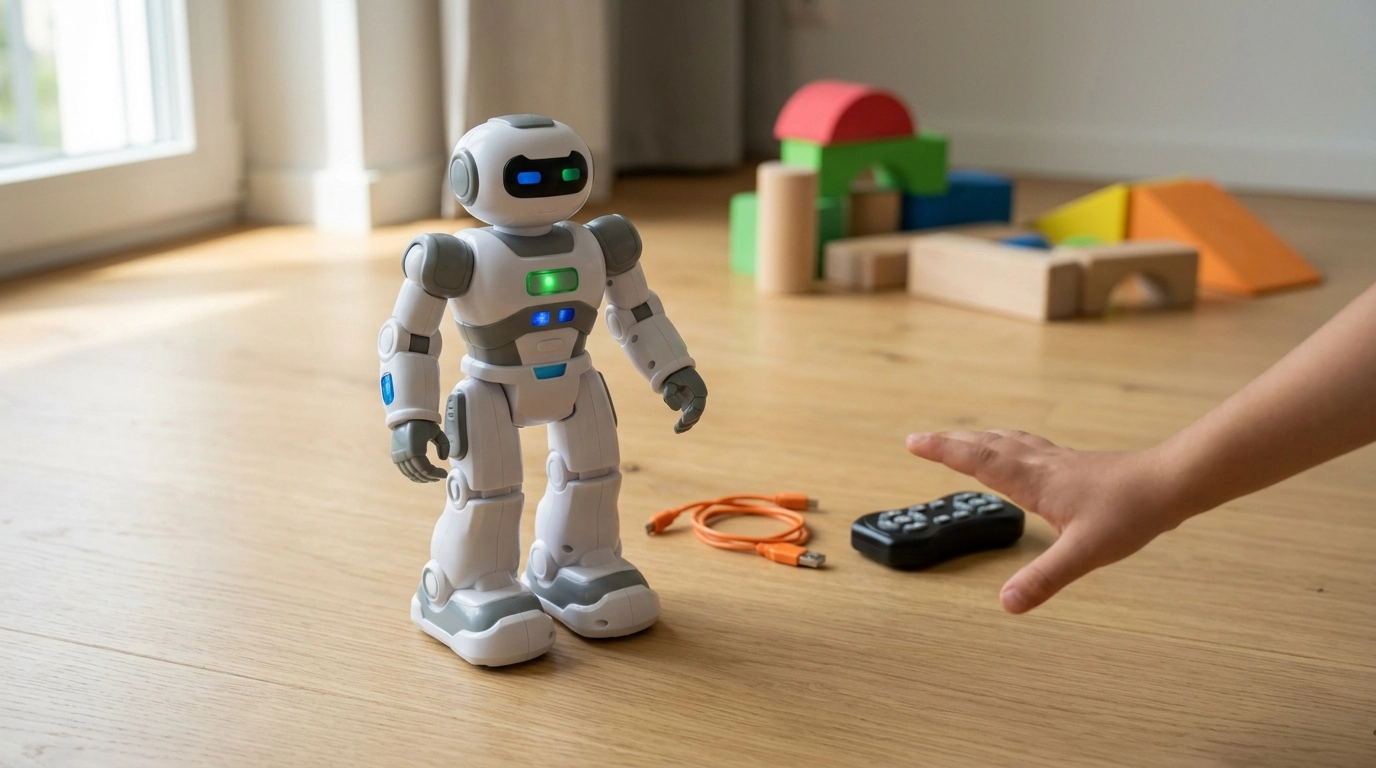
If you want a robot platform that’s already designed for programmable control (and can be enhanced with different input methods), see this guide to a smart RC robot with programmable features and rechargeable power: https://emprene.com/guide-gesture-smart-rc-robot-programmable-replay-usb-charging/.
FAQ
Can I make a voice-controlled robot car using Arduino?
Yes. Use Arduino to control the motors and steering, then send driving commands from a phone app (Bluetooth) or a voice-recognition module so spoken words map to actions like forward, reverse, left, right, and stop.
How to make a talking robot with Arduino?
Add a sound output option such as a small speaker with an audio module (or a text-to-speech module) and trigger phrases from Arduino based on events (sensor hits, button presses, or received commands). Pre-recorded audio is the simplest and most reliable approach.
Can I build a robot with Arduino?
Yes. Arduino is commonly used for DIY robots because it can read sensors and control motors with straightforward wiring and widely available libraries for motor drivers, servos, and distance sensors.















Leave a comment