RC Robot Explained: How Remote-Controlled Robots Work
What is an RC robot?
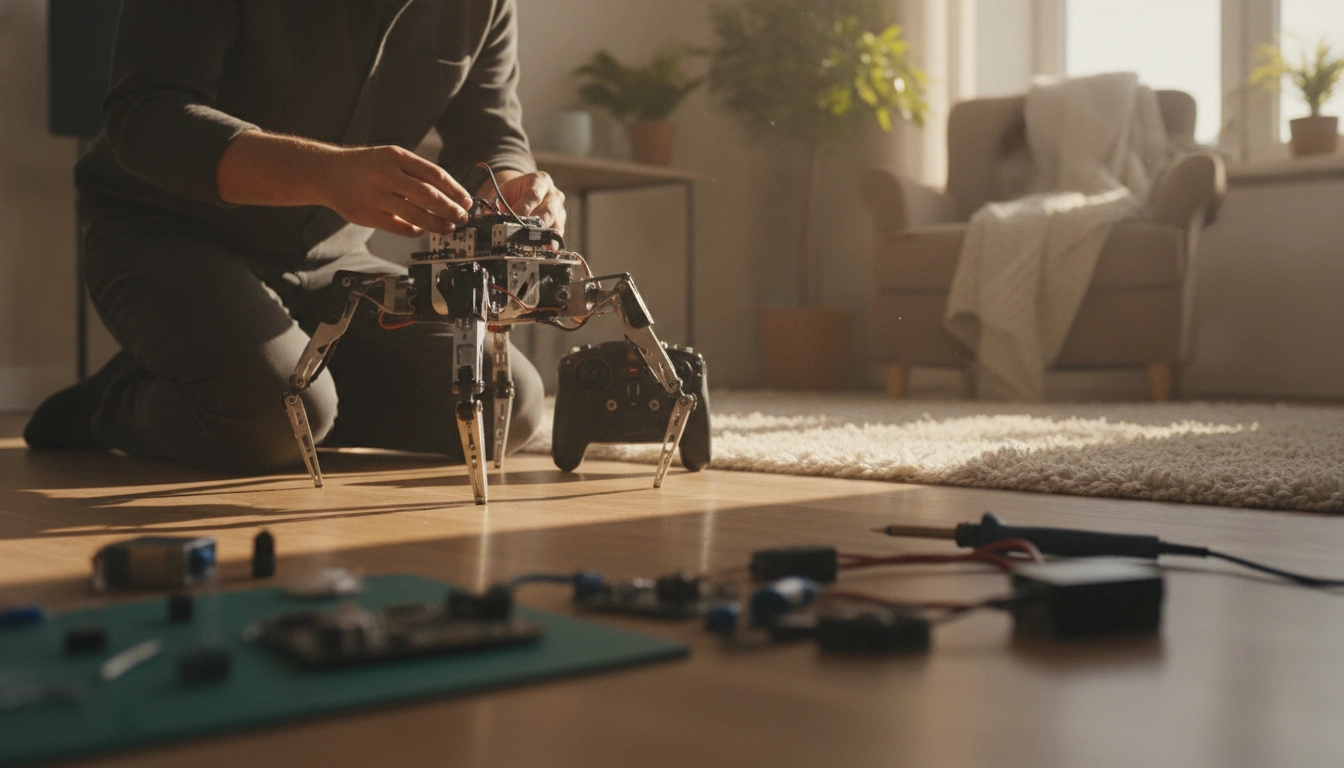
An RC robot is a remote-controlled robot that responds to commands from a handheld transmitter, a smartphone app, or built-in sensors. “RC” stands for radio control, meaning the robot receives signals wirelessly so it can move, turn, dance, make sounds, light up, or perform programmed actions without being physically connected to a controller.
How an RC robot works
At a basic level, an RC robot combines a receiver (to pick up control signals), a control board (to interpret those signals), motors/servos (to create movement), and a power source (often a rechargeable battery). When a button is pressed or a gesture command is recognized, the robot’s controller translates that input into motor actions—like rolling forward, rotating an arm, or changing facial LEDs and sound effects.
Common control types
RC robots aren’t limited to a simple forward/backward remote. Many models add multiple ways to play, such as:
- Traditional remote control: Directional driving plus action buttons.
- Gesture control: Hand motions trigger movement patterns and tricks.
- Programmable modes: Create action sequences the robot can repeat.
- Replay or demo features: The robot “records” a series of moves and plays them back.
Why people buy RC robots
RC robots are popular because they blend hands-on play with light STEM learning. Kids practice cause-and-effect, sequencing, and basic problem-solving while controlling motions and experimenting with different modes. For adults, they’re often a fun desk toy or a gift that feels more interactive than a standard RC car.
What to look for when choosing one
Key considerations include battery type (USB charging is convenient), control range, durability, and the number of modes (gesture, programming, music, dancing, obstacle avoidance, and more). If the robot offers programmable or replay functions, it can stay engaging longer than a one-note toy.
For a closer look at a gesture-enabled, programmable smart RC robot with USB charging, visit this detailed guide.
FAQ
How long does an RC robot battery usually last?
Many rechargeable RC robots run roughly 30–90 minutes per charge, depending on speed, lights/sounds, and motor load. USB-charging models are convenient for topping up between play sessions.














Leave a comment