2764Wh LiFePO4 Expansion Battery: Runtime & Compatibility
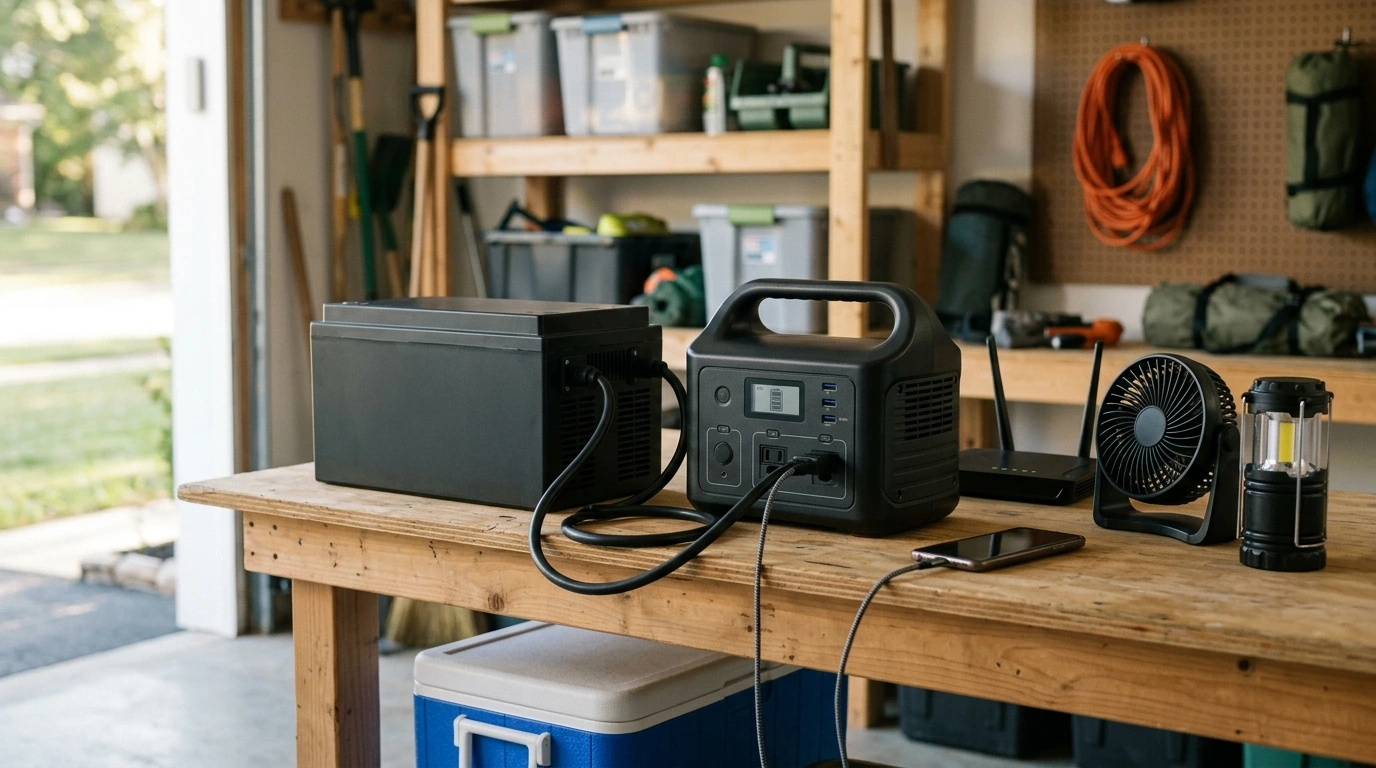
Portable 2764Wh LiFePO4 Expansion Battery for Power Stations: Off-Grid and Home Backup Power
A high-capacity expansion battery can turn a compatible power station into a longer-lasting backup system for outages, off-grid weekends, and daily load shifting. A 2764Wh LiFePO4 expansion battery is designed to add stored energy (watt-hours) to your setup so you can keep essentials running longer without changing the power station’s inverter limits. Below is what this capacity can realistically do, what to confirm before buying, and how to estimate runtime for common household and camp loads.
What a 2764Wh expansion battery adds to a power station
An expansion battery increases your system’s total stored energy, which is what determines how long devices can run. It does not automatically increase how many watts you can run at once—your power station’s inverter still sets the continuous and surge power limits.
- Longer runtimes for essentials: Best suited for longer-duration needs like refrigeration, internet/communications, lighting, CPAP, and device charging rather than high-wattage heating.
- LiFePO4 advantages: LiFePO4 chemistry is widely chosen for long cycle life and stable thermal behavior compared with many other lithium chemistries.
- Ecosystem pairing matters: Expansion batteries are typically built to work with specific power station lines; correct ports, cables, and firmware support can determine whether the system recognizes the battery and reports state-of-charge accurately.
Key specs that matter for real-world use
- Capacity (Wh): 2764Wh is a large add-on capacity that can cover multi-day essentials when loads are managed (especially if you cycle intermittent loads like a refrigerator).
- Battery chemistry (LiFePO4): Prioritizes longevity and safety, making it a practical choice for both frequent cycling (solar + daily use) and standby readiness for outages.
- Continuous/peak power: Determined by the power station inverter, not the expansion battery. Confirm the power station can handle startup surges from compressor-driven appliances (fridges/freezers) or small pumps.
- Charge/discharge limits: Some systems cap how quickly an expansion battery can charge, or how much combined load can be supported when multiple batteries are connected.
- Operating environment: Temperature affects usable capacity and charging behavior. Plan for reduced performance in cold weather and follow indoor use rules from the manufacturer.
Compatibility checklist before buying
- Connector and protocol match: Confirm the expansion port type and the exact supported battery models listed for your power station.
- System recognition (firmware): Some power stations need a firmware update to recognize an expansion battery, display accurate charge, or manage balanced charging.
- Cable length and placement: Decide where the battery will sit so cables aren’t strained, vents aren’t blocked, and both units remain stable on a hard surface.
- Stacking and expansion limits: Verify the maximum number of expansion batteries supported, and whether mixing generations/models is restricted.
- Warranty and support: Check coverage for both the add-on battery and the power station when used together, including any registration requirements.
Runtime planning: translating watt-hours into hours
A practical estimate uses usable energy rather than the headline watt-hours. Losses come from inverter conversion, DC-DC conversion, and idle consumption, so a real-world efficiency factor of about 0.80–0.90 is a reasonable planning range.
Rule of thumb: Runtime (hours) ≈ Battery Wh × efficiency factor ÷ Load watts.
| Device / Load | Typical Draw (W) | Estimated Runtime (hours) |
|---|---|---|
| Wi‑Fi router + modem | 20 | ≈117 |
| LED lighting (several rooms) | 50 | ≈47 |
| Laptop charging / light work | 60 | ≈39 |
| CPAP (no heated humidifier) | 40 | ≈59 |
| Full-size fridge (average over time) | 120 | ≈20 |
| Small fan | 30 | ≈78 |
| Phone charging (mixed) | 10 | ≈235 |
Off-grid use cases that benefit most
Home backup: how to stretch capacity during an outage
For broader energy guidance and planning, see the U.S. Department of Energy’s Energy Saver resources. For generator safety and carbon monoxide risk, review materials from the NFPA.
Safety, storage, and longevity basics for LiFePO4 systems
- Ventilation and clearance: Keep the battery and power station on a hard surface with airflow. Avoid tight cabinets unless explicitly approved by the manufacturer.
- Temperature care: Avoid charging below freezing unless the system supports cold-temperature charging or has built-in heating.
- Long-term storage: Follow the recommended storage state-of-charge and top-up schedule to preserve longevity.
- Cable management: Use only intended expansion cables; avoid adapters that can overheat or bypass protections.
- Certifications and handling: Look for reputable safety testing and follow the manual. Learn more about product safety certification through UL.
When an expansion battery is the right upgrade (and when it isn’t)
Product options
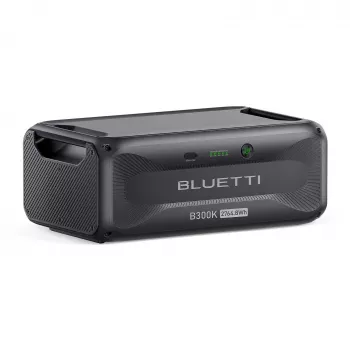
- Portable 2764Wh Expansion Battery for Power Stations, LiFePO4 Backup for Off-Grid and Home Use (USD 2048.49): A high-capacity add-on intended to increase stored energy for compatible power station systems.
- Luxurious Inflatable Starview Bubble Tent for Camping (USD 1713.49): A comfort-focused shelter option for basecamp setups where quiet electric power can support lighting and device charging.
FAQ
How long will a 2764Wh expansion battery run a refrigerator?
Most refrigerators have a high startup surge but a lower average draw over time because the compressor cycles. Using an 80–90% usable-energy assumption and an average of roughly 100–150W, a common ballpark is about 15–25 hours; measuring your fridge with a watt meter gives the most reliable estimate.
Can an expansion battery power high-watt appliances like space heaters or microwaves?
Only if the power station’s inverter can supply the required continuous and surge watts; the expansion battery mainly increases runtime, not inverter output. Even when wattage is supported, high-watt appliances drain stored energy very quickly, so runtimes are usually short.
Is LiFePO4 safe to keep indoors for home backup?
LiFePO4 is widely used for home backup because it is known for stable thermal behavior, but indoor use still requires basic precautions: keep the unit ventilated, away from heat sources and moisture, and use only manufacturer-approved equipment and cables while following the manual and safety markings.














Leave a comment