Lightweight Bagless Canister Vacuum: Suction & Easy Care
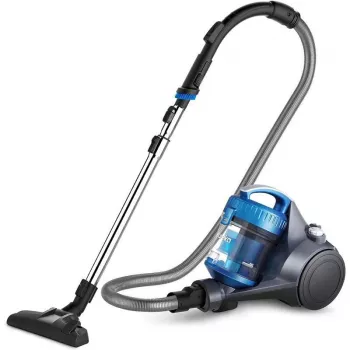
Lightweight Bagless Canister Vacuum: Easy Handling, Strong Pickup, Simple Maintenance
A compact canister vacuum can make day-to-day cleaning feel less like a workout and more like a quick reset—especially in apartments, multi-level homes, and spaces with tight corners. Lightweight, bagless canister models are built around a simple idea: keep the main unit easy to move, keep the hose-and-wand reach versatile, and keep maintenance straightforward so suction stays consistent from week to week.
Below is a practical look at what makes a canister vacuum feel “light” during real cleaning, how bagless designs compare to bagged models, what to expect on common surfaces, and the quick routines that help performance stay steady.
What Makes a Canister Vacuum Feel Lightweight in Real Use
“Lightweight” isn’t just about a number on a spec sheet. It’s about how the vacuum behaves as you pull it, lift it, steer it around furniture, and switch between floors.
- Carry weight vs. rolling weight: A lighter canister body is helpful on stairs and when moving room to room, while smooth wheels and a stable base reduce effort on flat floors.
- Ergonomics of the handle, hose, and wand: Above-floor cleaning (couch cushions, blinds, baseboards) depends heavily on how comfortable the grip feels and how naturally the wand reaches under beds or into corners.
- Cord length and cord management: A longer cord can mean fewer outlet swaps, and better cord control reduces tangles that slow you down.
- Compact storage footprint: A smaller canister is easier to stash in tight closets, small utility areas, or under shelving—important if you don’t want a vacuum permanently “parked” in view.
Bagless Design: Convenience, Tradeoffs, and Who It Suits
Bagless canister vacuums eliminate the ongoing need to buy replacement bags, but they shift more responsibility to filter care and proper emptying technique. For many homes, that trade is worth it—especially when cleanups are frequent and smaller.
- No replacement bags: You empty the dust cup and keep filters clean to maintain airflow.
- Dust exposure can be higher: Emptying a bin can release a puff of fine dust. When possible, empty outdoors or into a lined trash can, and avoid dumping from high above the bin.
- Filters become the “maintenance schedule”: A simple recurring routine helps prevent the slow suction drop that happens when filters clog.
- Ideal for quick cleanups: If you vacuum often (entryways, kitchens, pet zones), quick emptying can be more convenient than storing spare bags.
Bagless Canister Quick Pros/Cons
| Feature | Why it helps | What to watch for |
|---|---|---|
| Dust cup | Easy to see when it’s full; no bags to buy | Overfilling can reduce suction and increase fine dust |
| Filters | Capture fine particles and protect the motor | Need regular cleaning/replacement to keep performance steady |
| Compact canister | Easy to carry and store | May hold less debris than larger uprights |
| Hose + wand | Reach corners, baseboards, and above-floor areas | Clogs can happen if hair/lint builds up |
Performance on Common Surfaces
Canister vacuums shine when you match the right tool to the surface and let the airflow do the work. A few surface-specific expectations can help set you up for better results.
Noise, Air Quality, and Everyday Comfort
- Noise perception varies: Motor tone matters as much as volume. Many canister designs keep the motor farther from your ear than a stick vacuum, which can make the sound feel less harsh.
- Filtration supports cleaner exhaust: High-efficiency filtration (including HEPA-style systems) can help with allergy concerns, but only when seals and filters are maintained. For background on HEPA filtration in indoor air, see the EPA’s HEPA filter overview and the American Lung Association’s guidance.
- Emptying without the dust cloud: After switching the vacuum off, wait a few seconds for dust to settle in the bin before opening. Avoid aggressive shaking, which can push fine dust back into the air.
- Keep exhaust pathways clear: If filters are blocked, the vacuum may run louder and hotter. A quick filter check can solve “suddenly noisy” sessions.
For general product safety and recall awareness (useful for any household appliance), the U.S. Consumer Product Safety Commission (CPSC) maintains a searchable recall database.
Maintenance That Preserves Suction
Simple Upkeep Checklist
| Task | How often | Why it matters |
|---|---|---|
| Empty dust cup | Every 1–3 cleanups (or sooner) | Prevents airflow restriction and keeps pickup consistent |
| Clean pre-motor filter | Every 2–4 weeks | Protects the motor and reduces suction loss |
| Check hose/wand for clogs | Monthly | Maintains steady airflow and prevents overheating |
| Clean tools/brushes | Monthly or as needed | Improves hair pickup and edge cleaning |
| Replace filter(s) if needed | Per manual or when worn | Supports filtration and overall performance |
A Practical Option: Lightweight Bagless Canister Vacuum
- Main pick: Lightweight Bagless Canister Vacuum — a compact, bagless setup that keeps consumables simple while emphasizing routine filter care.
- Also available: Movable Steam Train, Car, Jeep 3D Puzzle Assembly Toy — a hands-on build that pairs well with a tidier craft table or hobby corner.
FAQ
Do bagless canister vacuums lose suction over time?
They can, but the cause is usually simple: a full dust cup, clogged filters, or a blockage in the hose/wand. Empty the bin, clean or replace filters as recommended, and check bends in the hose and wand where hair and lint commonly collect.
How often should the filters be cleaned or replaced?
A practical routine is to clean washable filters every few weeks (more often with pets or heavy use) and replace non-washable filters on the schedule in the manual or when performance and odor noticeably worsen. If a filter is washable, let it fully air-dry—often about 24 hours—before reinstalling.
Is a lightweight canister vacuum good for stairs and small apartments?
Yes, because a lighter canister is easier to carry and compact storage is a big advantage in small spaces. For stairs, a stable base, comfortable handle, and enough cord length to cover multiple steps without constant outlet switching make a noticeable difference.













Leave a comment